5 Cheapest ShipBob Alternatives for Small E-commerce Brands
Links on this page are commercial in intent, at no extra cost to you — they never affect which products we recommend. Read the full disclosure.
What will this cost you?
| Product | Plan | Published price |
|---|---|---|
| ShipStation | Starter | USD 14.99/mo |
| ShipStation | Standard | USD 29.99/mo |
| ShipStation | Premium | USD 349.99/mo |
| ShipMonk | — | Quote-based — contact vendor |
| ShipHero | — | Quote-based — contact vendor |
| Easyship | Free | USD 0/mo |
| Easyship | Plus | USD 29/mo |
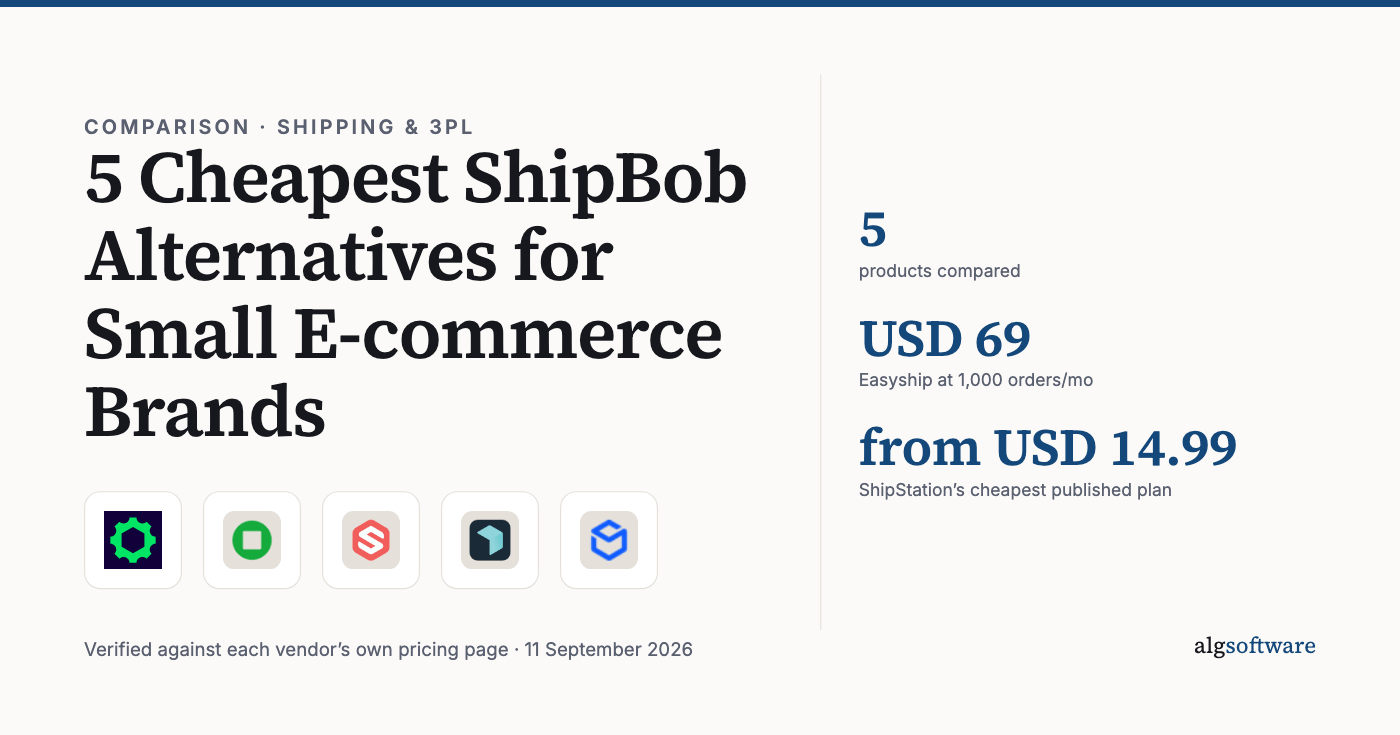
| Easyship | Premier | USD 69/mo |
| Easyship | Scale | USD 99/mo |
| ShipBob | — | Quote-based — contact vendor |
Pricing verified 11 Sept 2026 · source
Pricing verified 11 Sept 2026 · source
Pricing verified 11 Sept 2026 · source
Pricing verified 11 Sept 2026 · source
Pricing verified 11 Sept 2026 · source
Compare features
Showing all 5 products
| Product | Multi-warehouse | International shipping | Own carrier account | API access | Returns portal | Inventory sync | Label printing | Multi-carrier rates | Free plan | Free trial |
|---|---|---|---|---|---|---|---|---|---|---|
| ShipStation | Yes | Yes | Yes | Yes | Yes | Yes | Yes | Yes | — | — |
| ShipMonk | Yes | Yes | — | Yes | Yes | Yes | — | — | — | — |
| ShipHero | — | — | — | Yes | — | — | — | — | — | — |
| Easyship | Yes | Yes | Yes | Yes | Yes | Yes | Yes | Yes | Yes | Yes |
| ShipBob | Yes | — | — | Yes | — | Yes | — | — | — | — |
Why Small Brands Look Beyond ShipBob
ShipBob has earned its reputation as a top-tier third-party logistics (3PL) provider. With a broad warehouse network, strong integrations, and a polished dashboard, it’s a go-to for many direct-to-consumer brands. But for small e-commerce businesses shipping a few hundred orders per month, ShipBob’s fee structure—implementation costs, pick-and-pack fees, and storage charges—can eat into already-thin margins.
If you’ve been searching for cheap fulfillment services or an affordable 3PL for small business, you’re not alone. Below, we break down five ShipBob alternatives that offer competitive fulfillment without the sticker shock.
Key Takeaway: You don’t need to sacrifice reliability to save on fulfillment — but “cheap” and “published” are different things. Two of the providers below list their prices outright; the rest quote per account, and for a small brand that difference is worth almost as much as the rate itself.
Quick Comparison Table
| Provider | Best For | Starting Price | Min. Order Volume | Warehouse Locations |
|---|---|---|---|---|
| ShipStation | DIY shippers who want rate shopping | $14.99/mo (Starter, 50 shipments) | None | N/A (software only) |
| ShipMonk | Subscription box & DTC brands | Quote only | None published (form starts at 1–499/mo) | US, UK, Mexico |
| ShipHero | Brands running their own warehouse | Quote only | None published (form starts at 1–999/mo) | US (multiple) |
| Easyship | International & cross-border sellers | Free plan, then $29/mo Plus | None | Global network |
| Deliverr (Flexport) | Marketplace sellers needing fast badges | ~$4.15/unit fulfillment | None | US (distributed) |
 1. ShipStation — Best for Self-Fulfilling Sellers on a Budget
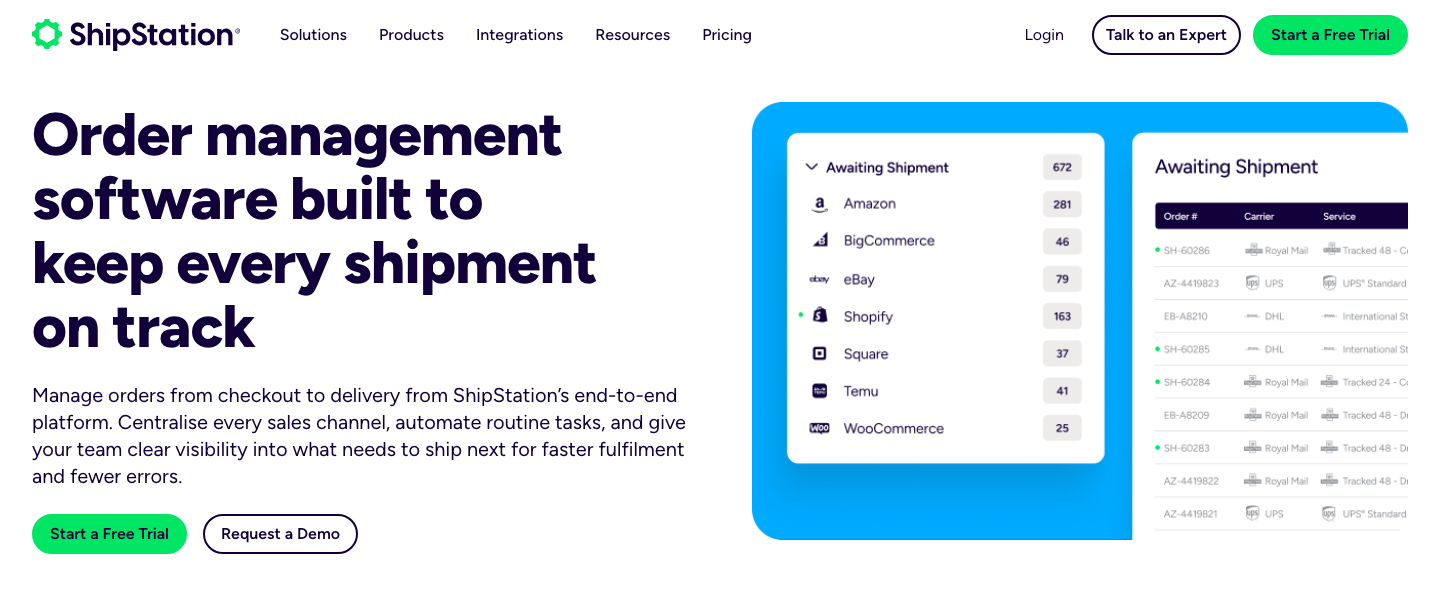
ShipStation isn’t a traditional 3PL—it’s a shipping software platform that connects to dozens of carriers and lets you compare rates in real time. For small brands that handle their own packing but want to slash shipping costs, it’s one of the most cost-effective ShipBob alternatives on the market.
Key Features
- Automated rate shopping across USPS, UPS, FedEx, and DHL
- Discounted carrier rates (up to 84% off retail USPS rates)
- Integrations with Shopify, WooCommerce, Amazon, Etsy, and 70+ platforms
- Batch label printing and branded tracking pages
- Inventory management and custom automation rules
Pros & Cons
| Pros | Cons |
|---|---|
| Plans start at $14.99/mo for 50 shipments | Not a fulfillment warehouse—you still pack orders yourself |
| Massive carrier and marketplace integrations | Advanced features locked behind higher tiers |
| No order minimums or long-term contracts | Support response times can be slow on lower plans |
Key Takeaway: ShipStation is ideal if you have the space to store and pack inventory yourself but want professional-grade shipping tools at a fraction of the cost of outsourced fulfillment.
 2. ShipMonk — Best for Subscription Boxes & DTC Brands
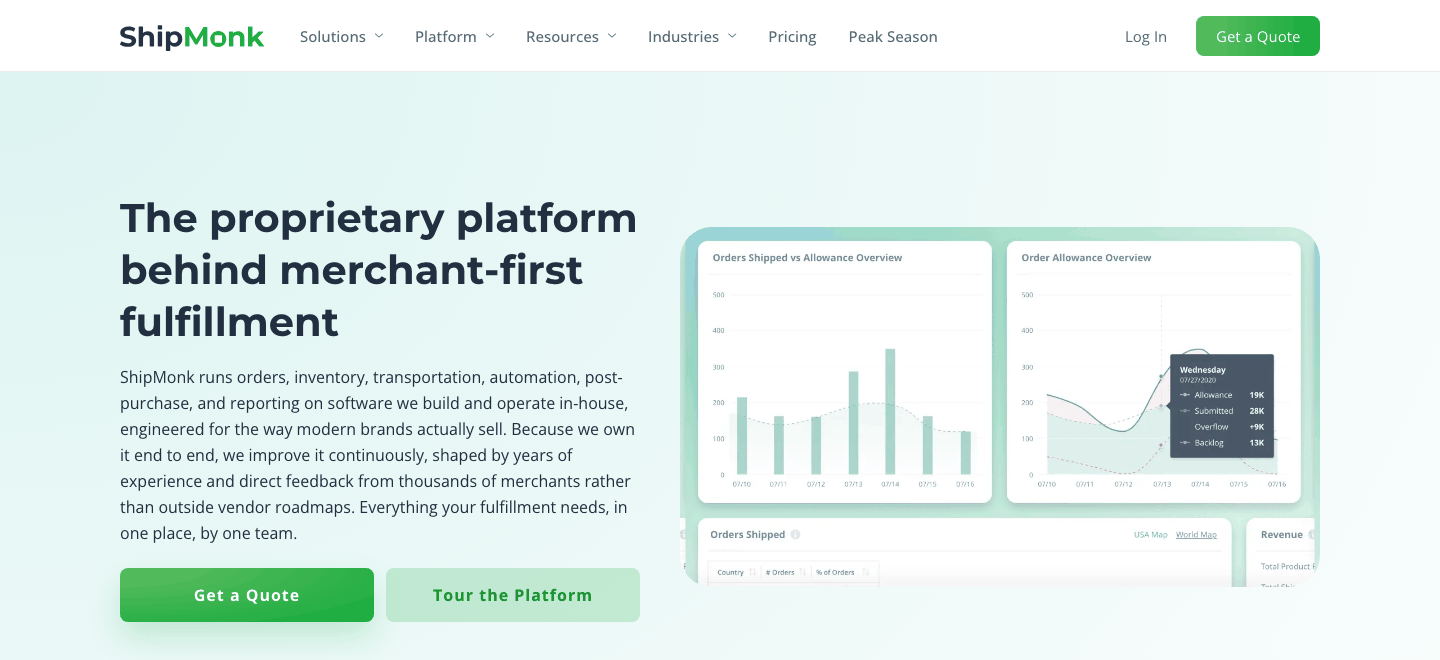
ShipMonk positions itself as a 3PL built for growing e-commerce brands—particularly those in the subscription box space. Its pitch is an itemised bill rather than a cheap one: storage, fulfilment, shipping and special projects are each broken out and negotiated per account. What it does not publish is a rate, or a minimum — the lowest band on its own quote form is 1–499 orders a month, which is a useful signal for anyone assuming they are too small to ask.
Key Features
- Pick-and-pack fulfilment charged per order, with a lower rate for each item beyond the first
- Dedicated happiness engineers for onboarding and support
- Kitting, assembly, and subscription box fulfillment
- Integrations with Shopify, BigCommerce, Amazon, and more
- Real-time analytics dashboard with inventory forecasting
Pros & Cons
| Pros | Cons |
|---|---|
| No published minimum — the quote form’s lowest band is 1–499 orders/month | Storage fees can add up for slow-moving SKUs |
| Excellent subscription box capabilities | Limited international warehouse footprint |
| Strong customer support during onboarding | Pricing tiers can be complex for multi-SKU orders |
 3. ShipHero — Best for Brands That Want the WMS, Not the Warehouse
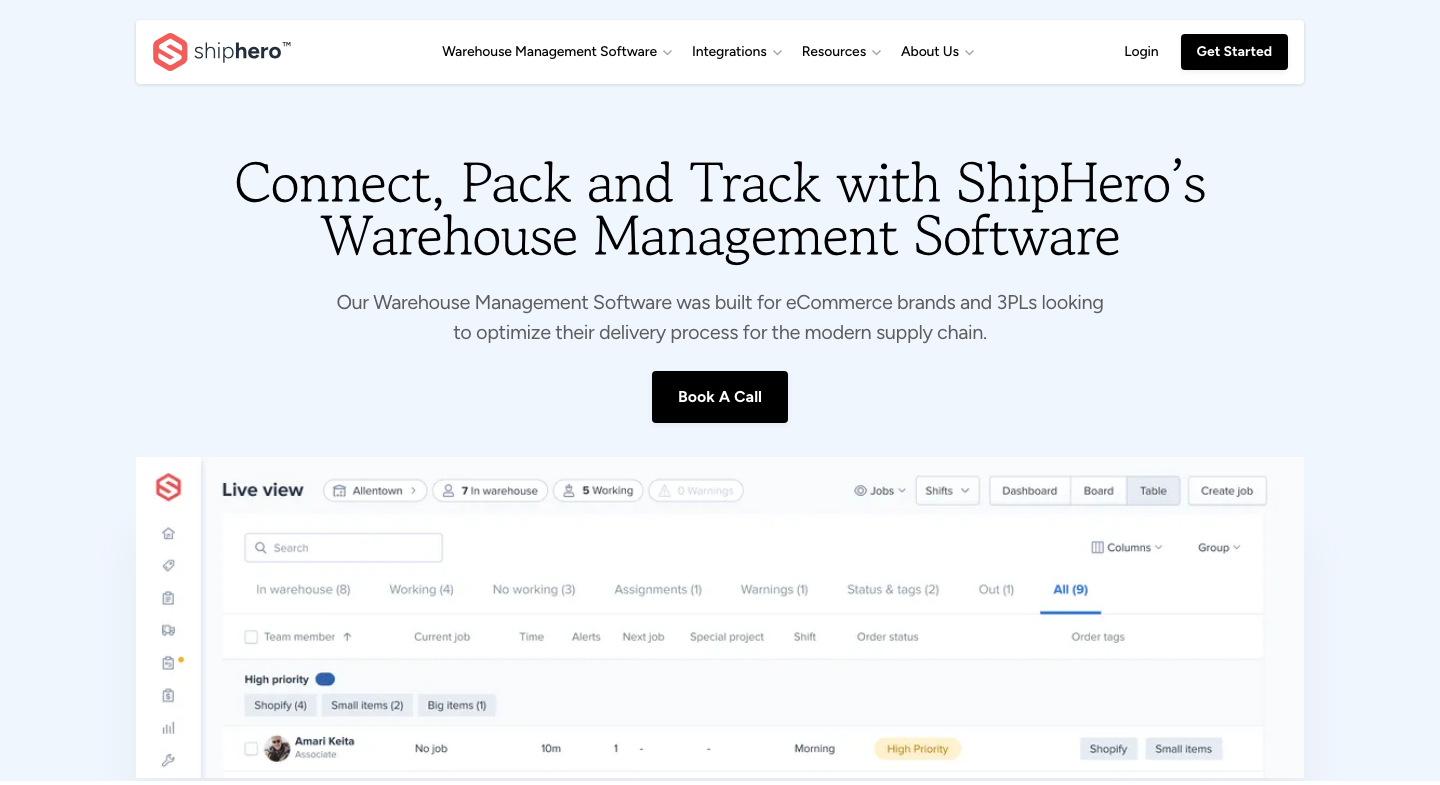
ShipHero offers two distinct products: a warehouse management system (WMS) for brands that manage their own warehouses, and a fully outsourced fulfillment service. For small brands hunting cheap fulfillment services, ShipHero is the odd one out on this list — it is the only entry whose core product is software you run yourself, and the only one that publishes no price at all. Its /pricing, /plans and /wms-pricing URLs each 404, and there is no pricing link in the navigation.
Key Features
- A WMS you can license on its own, without handing fulfilment over as well
- Bin-level inventory, optimised pick paths and cycle counts in one system
- Distributed US warehouse network for 1–2 day delivery coverage
- PostHero feature for optimized carrier selection
- Direct integrations with Shopify, Amazon, and major platforms
Pros & Cons
| Pros | Cons |
|---|---|
| Software and fulfilment from one vendor, so you can change model without changing tools | No published price — the only route to a number is a “Request a Quote” form |
| Strong WMS technology included | Less international coverage compared to competitors |
| The quote form’s order bands (1–999 up to 25,000+) say plainly who it is built for | Onboarding can take several weeks |
Key Takeaway: ShipHero earns its place here for what it lets you keep, not for what it costs: it is the only option on this list that will sell you the warehouse software without the warehouse. Budgeting for it is the opposite of frictionless, though — no price is published anywhere, so a sales call comes before a number.
 4. Easyship — Best for International & Cross-Border Shipping
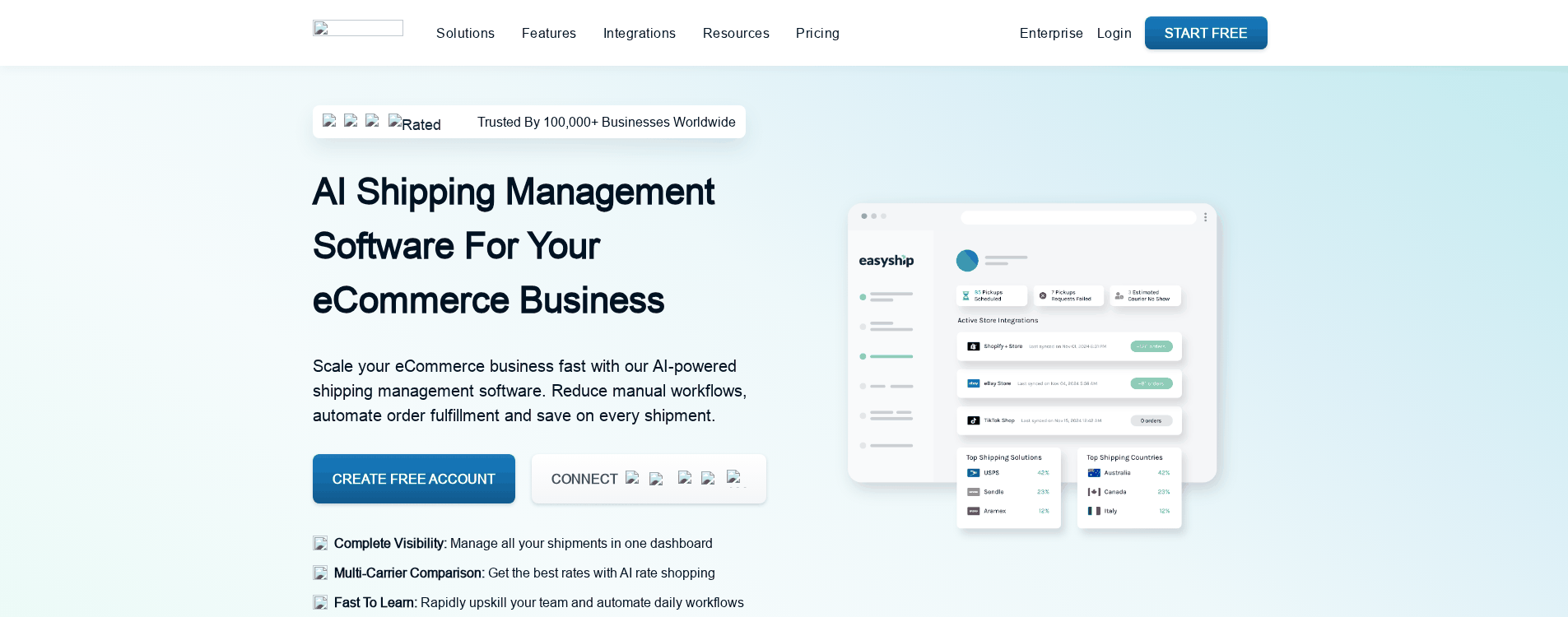
If your small e-commerce brand sells internationally—or plans to—Easyship deserves serious consideration. It combines shipping software with access to a global fulfillment network, and its free plan makes it one of the most accessible ShipBob alternatives for brands just getting started with cross-border logistics.
Key Features
- Free plan with up to 50 shipments per month
- Pre-negotiated rates from 550+ courier services worldwide
- Automated duties and tax calculation for international orders
- Branded tracking and delivery experience
- Warehouse partners across the US, Asia, Europe, and Australia
Pros & Cons
| Pros | Cons |
|---|---|
| Generous free tier for low-volume sellers | Fulfillment network is partner-based, not proprietary |
| Unmatched international shipping coverage | Domestic-only brands won’t leverage its biggest strengths |
| Automated customs and tax compliance | UI can feel overwhelming with so many carrier options |
 5. Deliverr (now Flexport) — Best for Marketplace Sellers Needing Fast Shipping Badges
Deliverr—now operating under the Flexport brand—pioneered affordable, badge-eligible fulfillment for marketplace sellers. If you sell on Amazon, Walmart, or eBay and need fast-shipping tags to stay competitive in search results, Deliverr’s distributed network offers a compelling and cost-effective alternative to ShipBob.
Key Features
- Transparent per-unit fulfillment pricing starting around $4.15
- Eligibility for Walmart 2-Day, eBay Fast ‘N Free, and Wish Express badges
- Distributed inventory across US warehouses for faster delivery
- No minimum order requirements
- Simple onboarding with direct marketplace integrations
Pros & Cons
| Pros | Cons |
|---|---|
| Fast-shipping badges boost marketplace visibility | Less suited for DTC-only Shopify stores |
| No minimums and simple per-unit pricing | Limited customization for packaging and inserts |
| Strong Walmart and multi-marketplace support | Integration with Flexport’s broader platform still evolving |
 How Do These Alternatives Compare to ShipBob?
ShipBob remains an excellent choice for mid-market and scaling DTC brands. Its two-day express shipping program, robust analytics, and wide warehouse network are hard to beat at scale. However, small brands often encounter friction with ShipBob in three areas:
- No published price at all — you cannot weigh ShipBob against anything until its sales team has quoted you
- Storage costs that penalize slow-moving inventory
- A process built around existing volume — the quote form is organised around shipments per month, so a pre-launch store is the hardest case of all to price
The five alternatives above address these pain points in different ways—from ShipStation’s software-only approach to ShipMonk’s zero-minimum model to ShipHero’s flat-rate simplicity.
How to Choose the Right Affordable 3PL
Picking the right cheap fulfillment services provider isn’t just about finding the lowest per-order price. Consider these factors before committing:
1. Order Volume & Growth Trajectory
If you’re shipping fewer than 100 orders per month, Easyship’s free tier keeps your software cost at zero outright, and ShipStation’s Starter plan is $14.99/mo at 50 shipments. Once you cross 200–500 orders monthly, a full-service 3PL like ShipMonk or ShipHero starts making more financial sense because the time savings outweigh the fulfillment fees — though you will need quotes from both to prove it, since neither publishes a rate.
2. Domestic vs. International
Selling primarily within the US? ShipHero and ShipMonk offer strong domestic coverage. Shipping globally? Easyship’s automated duties calculator and 550+ courier network will save you significant headaches at customs.
3. Marketplace vs. DTC
Marketplace sellers on Amazon, Walmart, or eBay should seriously consider Deliverr (Flexport) for its fast-shipping badge eligibility. DTC brands on Shopify or WooCommerce will get more value from ShipMonk’s or ShipHero’s branded unboxing capabilities.
4. Packaging & Customization Needs
If branded inserts, custom packaging, or subscription box kitting are core to your customer experience, ShipMonk leads the pack. If you just need standard poly mailers and boxes shipped fast, ShipHero or Deliverr will keep things simple and affordable.
Key Takeaway: The cheapest 3PL is the one that matches your current volume, sales channels, and growth plans—not necessarily the one with the lowest sticker price per order.
Frequently Asked Questions
What is the cheapest 3PL for small e-commerce brands?
For self-fulfilling brands, ShipStation offers the lowest published entry point at $14.99/month for 50 shipments, carrier discounts included. For outsourced fulfillment there is no published answer: ShipMonk, ShipHero and ShipBob all quote per account, so “cheapest” can only be settled by requesting quotes with your own order data. ShipMonk is the easiest of the three to approach small — its quote form takes enquiries from the 1–499 orders/month band up.
Can I switch from ShipBob to another 3PL easily?
Yes, though you’ll need to coordinate inventory transfer. Most providers on this list—including ShipMonk and ShipHero—offer onboarding support to help migrate your inventory and integrate with your existing sales channels. Plan for a 2–4 week transition period.
Do any ShipBob alternatives offer free plans?
Easyship offers a free plan that includes up to 50 shipments per month, making it the best option for very low-volume sellers. ShipStation publishes no free plan — all three of its tiers are paid, starting at $14.99/month.
Final Verdict: Which ShipBob Alternative Should You Choose?
| Your Situation | Our Pick | Why |
|---|---|---|
| You pack orders yourself and want cheaper rates | ShipStation | Published pricing from $14.99/mo, carrier discounts included |
| You run a subscription box or DTC brand | ShipMonk | No minimums, excellent kitting, and strong support |
| You run your own warehouse and want the software, not the 3PL | ShipHero | The only option here that sells the WMS on its own |
| You sell internationally | Easyship | Free tier + unmatched global carrier network |
| You sell on marketplaces and need fast badges | Deliverr (Flexport) | Badge eligibility drives marketplace visibility |
There’s no single “best” ShipBob alternative—the right choice depends on your order volume, sales channels, and how much of the fulfillment process you want to handle yourself. Two of the five publish their prices, ShipStation and Easyship, so you can test either today without speaking to anybody. ShipMonk and ShipHero quote per account, which means a sales conversation has to happen before you can compare them on cost at all.
Start by mapping your monthly order volume, average order size, and primary sales channels. Then request quotes from two or three providers on this list. Easyship and ShipStation you can simply sign up for and test the same day; the 3PLs want a conversation first — ShipHero states outright that it offers no free trial — so build that into your timeline rather than expecting to trial everything in an afternoon.
ALG Software independently researches and reviews business tools. Pricing and feature information is based on publicly available data and may change. Always verify current pricing directly with each provider.
At your current volume, who packs your orders?
- We do, in-house — your answer
- A 3PL — your answer
- Both — split by product or region — your answer
- We don't ship physical goods — your answer
One tap, no sign-in. We store the count for each option and nothing else — no cookie, no account, no identifier, and nothing you typed. Nothing is saved on your device, so reloading the page asks again.
See the live Shipping & 3PL leaderboard — every product we have verified in this category, ranked by what it costs at your volume, with every figure dated and sourced.