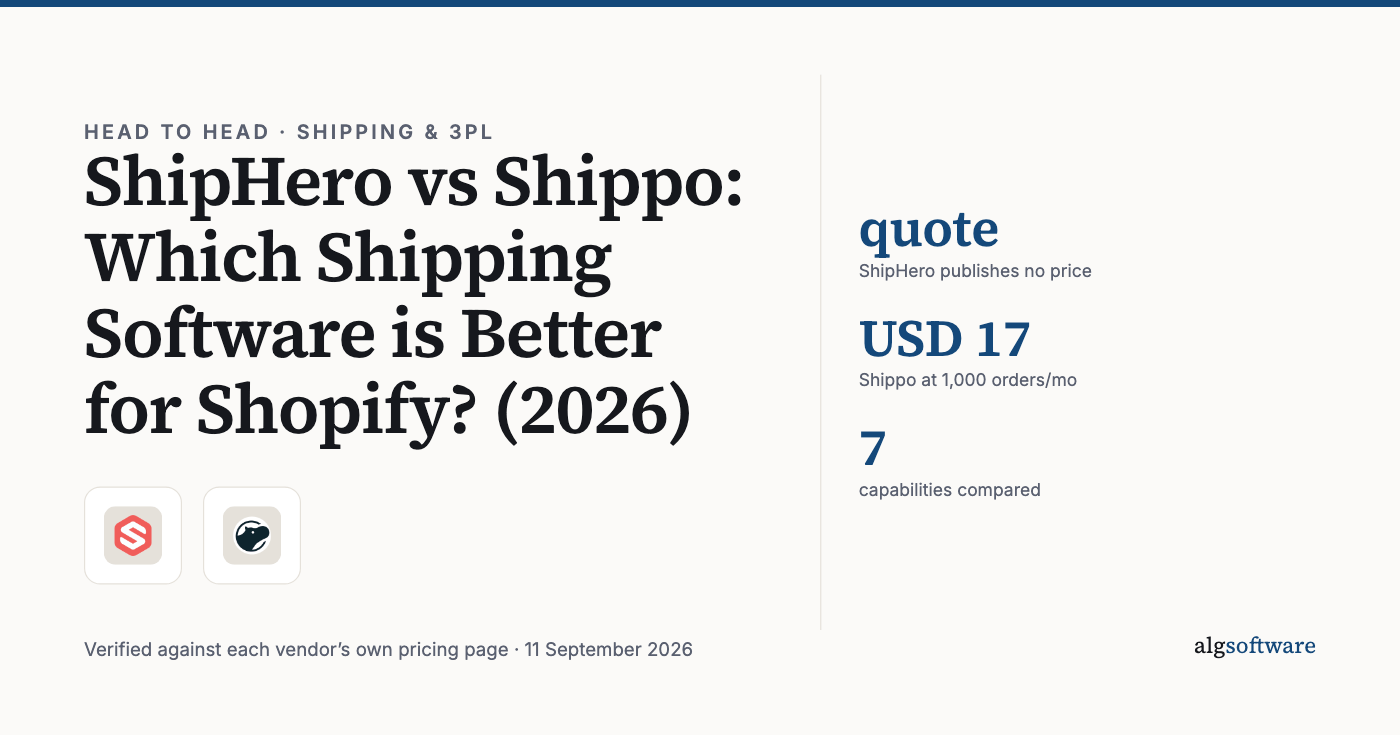
ShipHero vs Shippo: Which Shipping Software is Better for Shopify? (2026)
Links on this page are commercial in intent, at no extra cost to you — they never affect which products we recommend. Read the full disclosure.
What will this cost you?
| Product | Plan | Published price |
|---|---|---|
| ShipHero | — | Quote-based — contact vendor |
| Shippo | Starter | USD 0/mo |
| Shippo | Pro | USD 17/mo + USD 0.08/order |
| Shippo | Premier | Contact vendor |
Pricing verified 11 Sept 2026 · source
Pricing verified 11 Sept 2026 · source
If you run a Shopify store, you already know that shipping is one of the most operationally demanding parts of ecommerce. Late deliveries, label-printing headaches, and rising carrier costs eat into margins and erode customer trust. That’s why picking the right shipping platform matters — a lot.
Two names that consistently surface in the conversation are ShipHero and Shippo. Both integrate with Shopify, both promise discounted carrier rates, and both aim to simplify fulfillment. But they approach the problem from very different angles.
In this comparison we’ll walk through features, pricing, Shopify integration depth, pros and cons, and — ultimately — which tool is the better fit depending on your business stage and order volume.
 ShipHero Overview
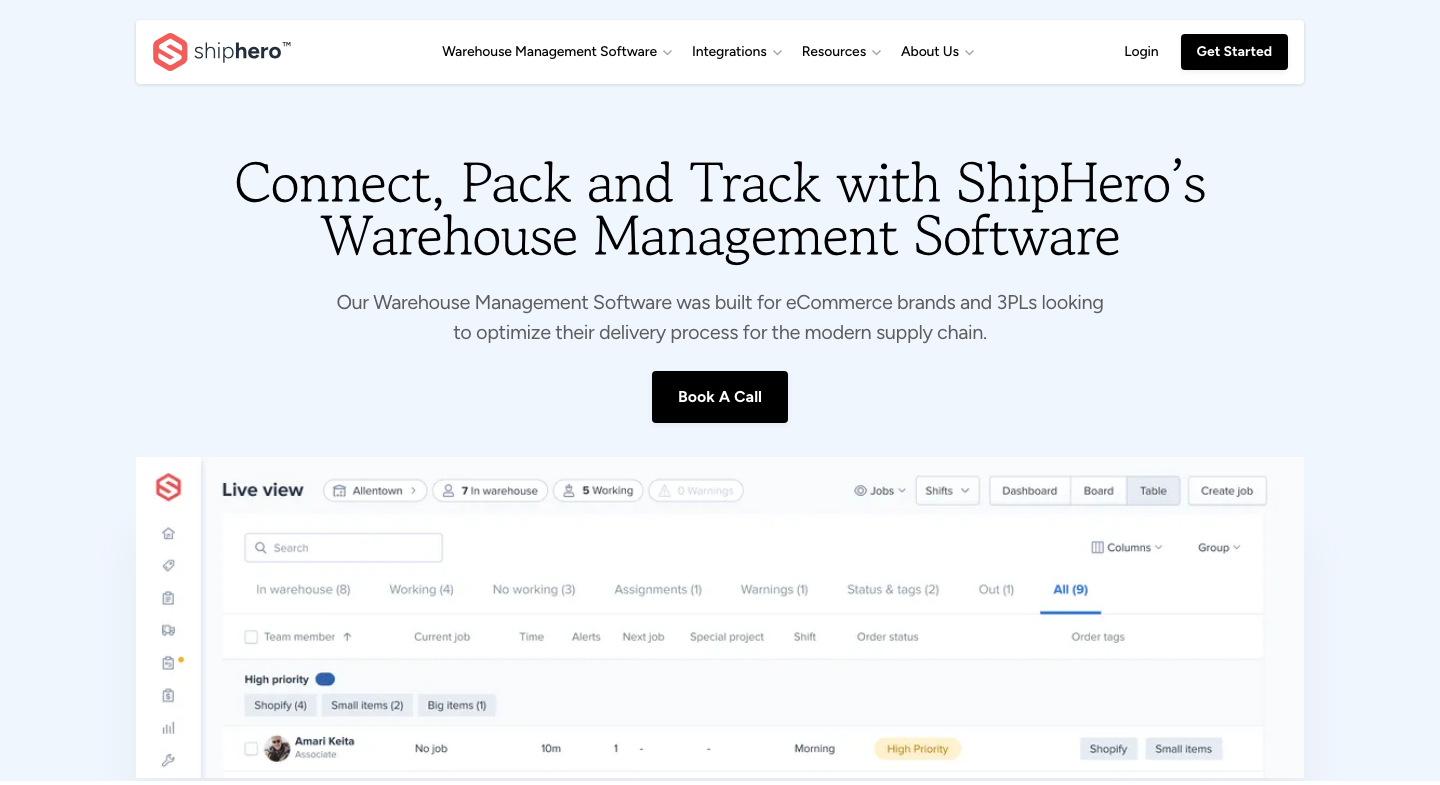
ShipHero positions itself as an all-in-one shipping and warehouse management system (WMS). Founded in 2013, the platform serves DTC brands, third-party logistics providers (3PLs), and high-volume Shopify merchants who need end-to-end visibility from the moment an order is placed to the moment it’s delivered.
ShipHero offers two core products:
- ShipHero Software — A cloud-based WMS you install in your own warehouse. It handles picking, packing, inventory sync, and multi-carrier label generation.
- ShipHero Fulfillment — A fully outsourced fulfillment network where ShipHero stores, picks, packs, and ships on your behalf from warehouses across the U.S. and Canada.
For Shopify sellers, the software option is the most direct comparison to Shippo. It connects natively to Shopify and Shopify Plus, pulls orders automatically, and pushes tracking numbers back to the storefront in real time.
ShipHero Key Features
- Full warehouse management system with barcode scanning
- Batch picking and wave-based fulfillment workflows
- Multi-warehouse and multi-location inventory sync
- Automated carrier rate shopping across UPS, USPS, FedEx, DHL, and regional carriers
- Shopify and Shopify Plus native integration
- Returns management (RMA) portal
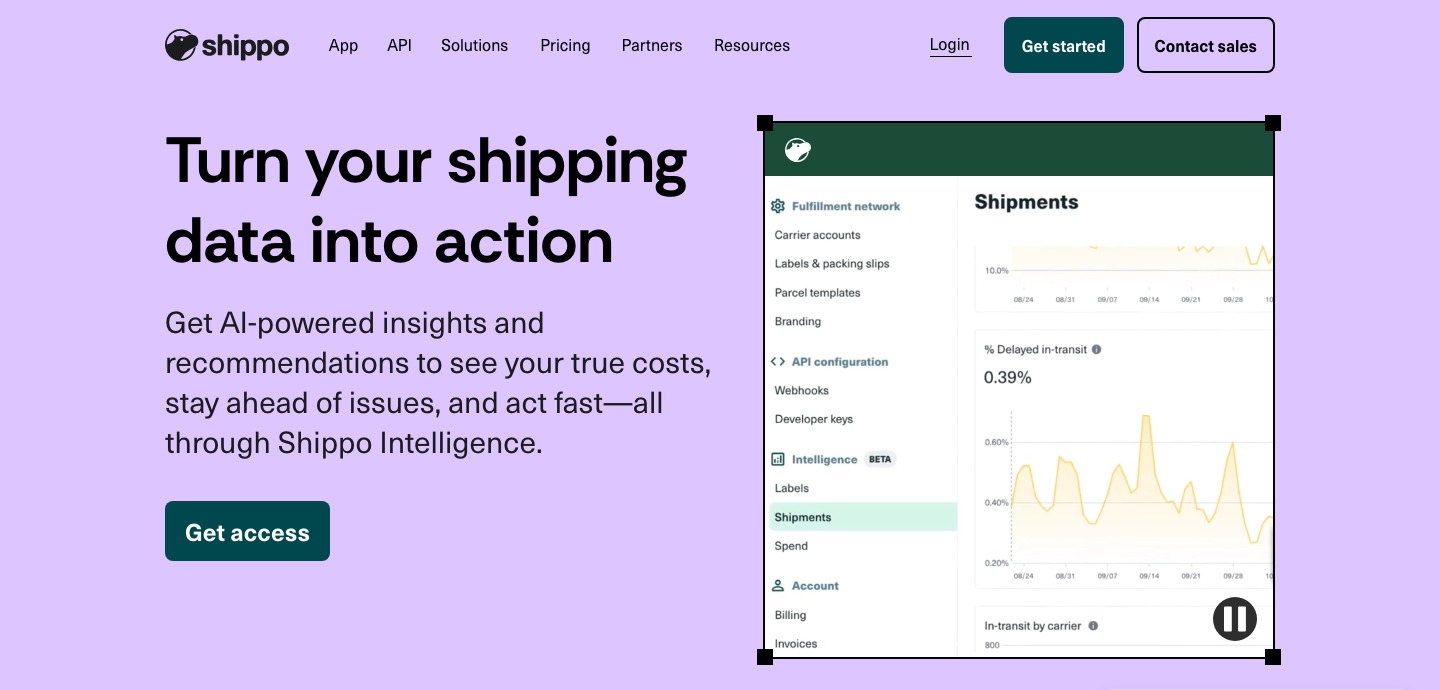
- Analytics dashboard with SLA tracking and cost-per-order reporting
- Outsourced fulfillment option for brands that want to go hands-off
ShipHero Pros & Cons
Pros:
- Combines WMS + shipping in a single platform — reduces tool sprawl
- Excellent for brands shipping 1,000+ orders per day
- Strong inventory accuracy tools (cycle counts, lot tracking)
- Outsourced fulfillment option provides a growth path without switching platforms
- PostHero feature provides branded tracking pages
Cons:
- Higher price point — not cost-effective for low-volume sellers
- Steeper learning curve due to WMS complexity
- Onboarding can take several weeks for full warehouse setup
- Overkill if you only need label printing and rate comparison
 Shippo Overview
Shippo takes a fundamentally different approach. Rather than managing your entire warehouse, Shippo focuses on one thing: making it fast and affordable to compare carrier rates, print shipping labels, and track packages. Think of it as the multi-carrier shipping API layer that sits between your Shopify store and carriers like USPS, UPS, FedEx, and DHL Express.
Founded in 2013 in San Francisco, Shippo has processed hundreds of millions of shipments and is trusted by ecommerce sellers of all sizes. Its lightweight web dashboard and robust API make it a favorite among developers and small business owners alike.
Shippo Key Features
- Multi-carrier rate comparison across 40+ carriers, at discounted rates
- Discounted USPS, UPS, and DHL Express rates out of the box
- One-click Shopify integration — orders sync automatically
- Batch label creation for high-volume days
- Branded tracking pages and email notifications
- Returns label generation
- Shipping API and webhooks for custom integrations
- Address validation to reduce delivery failures
Shippo Pros & Cons
Pros:
- Free tier available — Starter costs nothing at all, up to 30 shipments a month
- Dead-simple setup; connect to Shopify in minutes
- Pre-negotiated carrier discounts with no volume commitments
- Clean, intuitive dashboard with minimal learning curve
- Powerful API for developers building custom shipping workflows
Cons:
- No warehouse management or inventory tracking
- Limited picking/packing workflow support
- Past Pro’s 10,000 shipments a month, labels cost $0.08 each and the next tier up, Premier, is quote-only
- Advanced automation rules are only available on the paid Pro plan
ShipHero vs Shippo: Feature-by-Feature Comparison
| Feature | ShipHero | Shippo |
|---|---|---|
| Primary Focus | WMS + Shipping | Multi-carrier Shipping Labels |
| Shopify Integration | Native (Shopify & Shopify Plus) | Native (all Shopify plans) |
| Warehouse Management | Full WMS with barcode scanning | Not available |
| Carrier Options | Major U.S. carriers + regional | 85+ global carriers |
| Discounted Rates | Yes (volume-dependent) | Yes (available on all plans) |
| Batch Label Printing | Yes | Yes |
| Inventory Management | Multi-location sync, cycle counts | Not available |
| Returns Management | Built-in RMA portal | Return labels only |
| Branded Tracking | Yes (PostHero) | Yes |
| API Access | Yes | Yes (developer-first design) |
| Outsourced Fulfillment | Yes (ShipHero Fulfillment) | No |
| Best For | Mid-market & enterprise brands | SMBs & growing Shopify stores |
Pricing: ShipHero vs Shippo
Pricing is where these two platforms diverge most sharply, and it’s often the deciding factor for Shopify merchants choosing between them.
ShipHero Pricing
ShipHero’s software plans are geared toward established operations, and the pricing is quote-based in the strongest sense of the term: /pricing, /plans and /wms-pricing all 404, the navigation carries no pricing link, and the single pricing-adjacent page is a “Request a Quote” form. It asks for your name, phone, email, company and a monthly order band — 1–999, 1,000–9,999, 10,000–24,999 or 25,000+ — and those bands say more about the intended customer than any figure we could responsibly print.
For a Shopify store shipping a few hundred orders a month, the whole of that first band — everything under 1,000 orders — collapses into one bucket, and you still have to sit through a qualification call to find out what it costs. For brands running thousands of orders a day across several warehouses, that call is simply how this class of software is bought, and the WMS displaces standalone inventory tooling you would otherwise license separately.
Shippo Pricing
For genuinely small stores, Shippo’s Starter plan is an incredibly cost-effective way to reach discounted carrier rates with no monthly commitment at all — up to 30 shipments a month. Past that the flat-rate Pro plan takes over, and it is still one published number rather than a conversation.
| Pricing Factor | ShipHero | Shippo |
|---|---|---|
| Starting Price | Not published — quote only | Free (Starter, up to 30 shipments/mo) |
| Free Plan | No | Yes |
| Per-Label Cost | Not published | None until 10,000 shipments/mo, then $0.08 |
| Built For | The upper bands of its quote form (10,000–25,000+ orders/mo) | Stores inside Pro’s 10,000 shipments/mo |
Shopify Integration: How Do They Compare?
Both ShipHero and Shippo offer native Shopify integrations, but the depth of those integrations differs.
Shippo’s Shopify integration is streamlined and purpose-built for label generation. Once connected, your Shopify orders appear in the Shippo dashboard within seconds. You select the best rate, print a label, and tracking info pushes back to Shopify automatically. It also supports Shopify’s multi-location feature for merchants who ship from more than one address.
ShipHero’s Shopify integration goes deeper. Beyond pulling orders and pushing tracking, ShipHero syncs inventory levels bi-directionally between the WMS and Shopify. If a warehouse picker scans and ships an item, Shopify’s stock count updates in real time. This level of sync is critical for brands selling on multiple channels (Shopify, Amazon, wholesale) to prevent overselling.
For a solo-founder Shopify store, Shippo’s integration is more than sufficient. For a brand with a warehouse team and multi-channel sales, ShipHero’s integration eliminates the need for middleware tools like Celigo or custom Zapier automations.
ShipHero Alternatives: Where Does Shippo Fit?
If you’ve been searching for ShipHero alternatives, you’re likely looking for a solution that’s either more affordable, simpler to implement, or both. Here’s how Shippo and other common alternatives stack up:
- Shippo — Best alternative if you need carrier rate shopping and label printing without WMS overhead.
- ShipStation — A middle-ground option with more automation rules than Shippo but without full WMS.
- Pirate Ship — A free label-printing tool with USPS and UPS discounts, but limited beyond basic shipping.
- EasyPost — API-first shipping platform aimed at developers; less suited for non-technical teams.
Among these, Shippo strikes the best balance between simplicity, carrier coverage, and cost for the average Shopify seller looking to move away from ShipHero or evaluate a less complex solution.
Who Should Choose ShipHero?
ShipHero is the right pick if:
- You operate your own warehouse (or multiple warehouses) and need a WMS
- You process 1,000+ orders per day and need batch fulfillment workflows
- You sell on Shopify and other channels and need centralized inventory sync
- You want the option to outsource fulfillment to a 3PL network without re-platforming
- You have a warehouse team that needs barcode scanning, pick lists, and packing verification
Who Should Choose Shippo?
Shippo is the better choice if:
- You’re a small-to-medium Shopify store shipping up to a few hundred orders per day
- You want discounted carrier rates without a monthly subscription commitment
- You need a quick, no-fuss Shopify integration that works in minutes
- You’re a developer who wants a robust shipping API for custom workflows
- You don’t operate a warehouse and handle fulfillment from a home office, retail location, or small stockroom
Our Verdict: ShipHero vs Shippo for Shopify
Key Takeaway: There is no universal winner here — the right choice depends entirely on your operational complexity and order volume. Shippo wins on accessibility, cost, and ease of use. ShipHero wins on warehouse depth, multi-channel inventory control, and enterprise-grade fulfillment.
If you’re running a growing Shopify store and your biggest pain point is comparing rates and printing labels efficiently, Shippo is the clear winner. Its free tier, intuitive interface, and broad carrier support make it one of the best shipping tools available for small and mid-sized ecommerce businesses in 2026.
If you’ve outgrown label-printing tools and your bottleneck has shifted to warehouse operations — inventory accuracy, pick-and-pack speed, and multi-location coordination — ShipHero is worth the investment. It replaces an entire stack of fulfillment tools with a single platform, and its outsourced fulfillment option means you can scale without switching providers.
For most Shopify merchants reading this, we’d recommend starting with Shippo on its free Starter plan. It costs nothing to test, integrates in minutes, and delivers immediate savings on carrier rates. As your operation grows and you find yourself needing warehouse-level control, ShipHero becomes the natural next step.
| Scenario | Our Pick |
|---|---|
| New Shopify store, low volume | Shippo |
| Growing DTC brand, 100–500 orders/day | Shippo (Pro plan) |
| Multi-warehouse operation, 1,000+ orders/day | ShipHero |
| Want to outsource fulfillment entirely | ShipHero Fulfillment |
| Developer building custom shipping workflow | Shippo |
| Budget-conscious, need free option | Shippo |
At your current volume, who packs your orders?
- We do, in-house — your answer
- A 3PL — your answer
- Both — split by product or region — your answer
- We don't ship physical goods — your answer
One tap, no sign-in. We store the count for each option and nothing else — no cookie, no account, no identifier, and nothing you typed. Nothing is saved on your device, so reloading the page asks again.
See the live Shipping & 3PL leaderboard — every product we have verified in this category, ranked by what it costs at your volume, with every figure dated and sourced.