ShipStation vs Sendcloud: Which Shipping Software is Better for Shopify? (2026)
Links on this page are commercial in intent, at no extra cost to you — they never affect which products we recommend. Read the full disclosure.
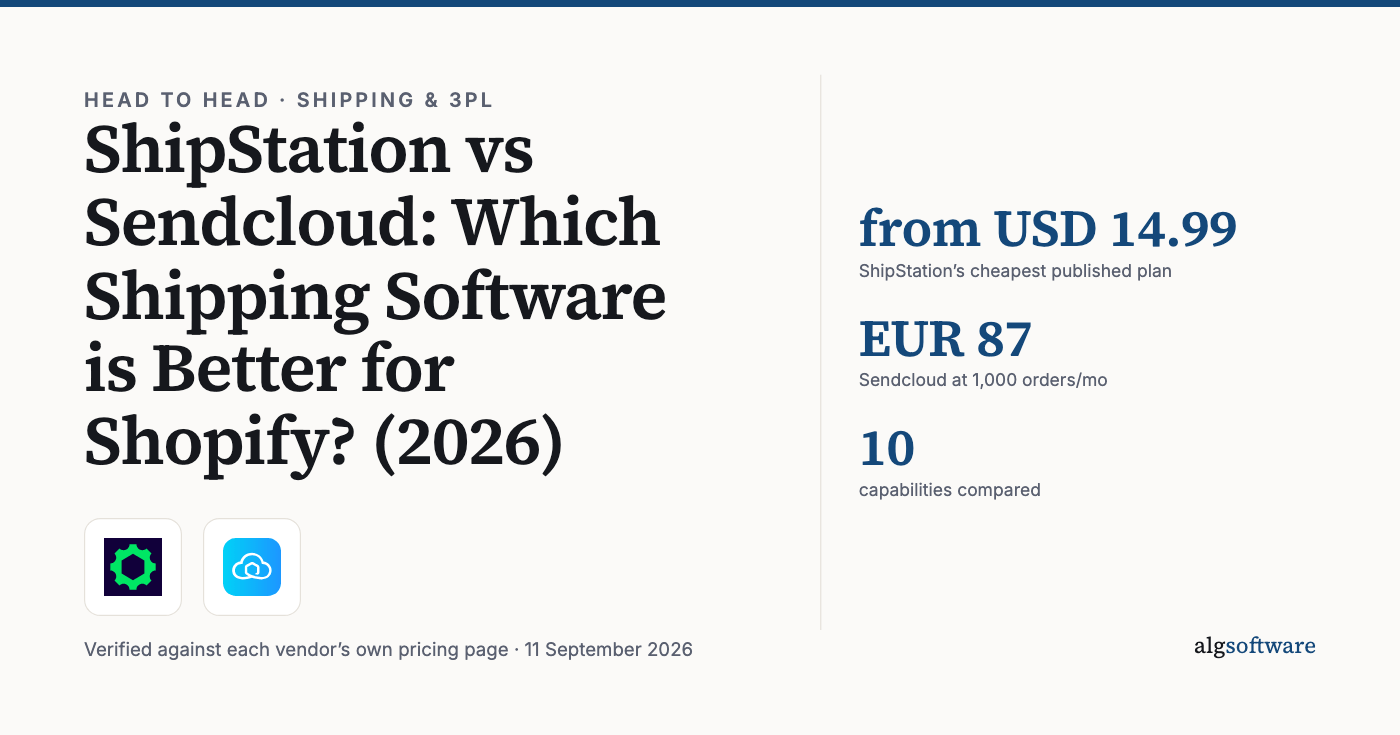
What will this cost you?
| Product | Plan | Published price |
|---|---|---|
| ShipStation | Starter | USD 14.99/mo |
| ShipStation | Standard | USD 29.99/mo |
| ShipStation | Premium | USD 349.99/mo |
| Sendcloud | Free | EUR 0/mo |
| Sendcloud | Lite | EUR 28/mo + EUR 0.1/order |
| Sendcloud | Growth | EUR 87/mo + EUR 0.09/order |
| Sendcloud | Premium | EUR 175/mo + EUR 0.08/order |
| Sendcloud | Pro | EUR 639/mo + EUR 0.07/order |
| Sendcloud | Enterprise | Contact vendor |
Pricing verified 11 Sept 2026 · source
Pricing verified 11 Sept 2026 · source
Shipping is one of the most operationally intensive parts of running a Shopify store. The right shipping platform saves you hours every week, reduces label costs, and keeps customers happy with tracking updates and fast deliveries. Two platforms that consistently appear on shortlists are ShipStation and Sendcloud.
But they’re built for different merchants and different markets. ShipStation has long been the go-to for North American sellers, while Sendcloud has carved out a dominant position across Europe. So which one is actually better for your Shopify store in 2026?
This comparison breaks down both platforms across pricing, Shopify integration depth, carrier networks, and automation capabilities. Here’s what we found.
 ShipStation Overview
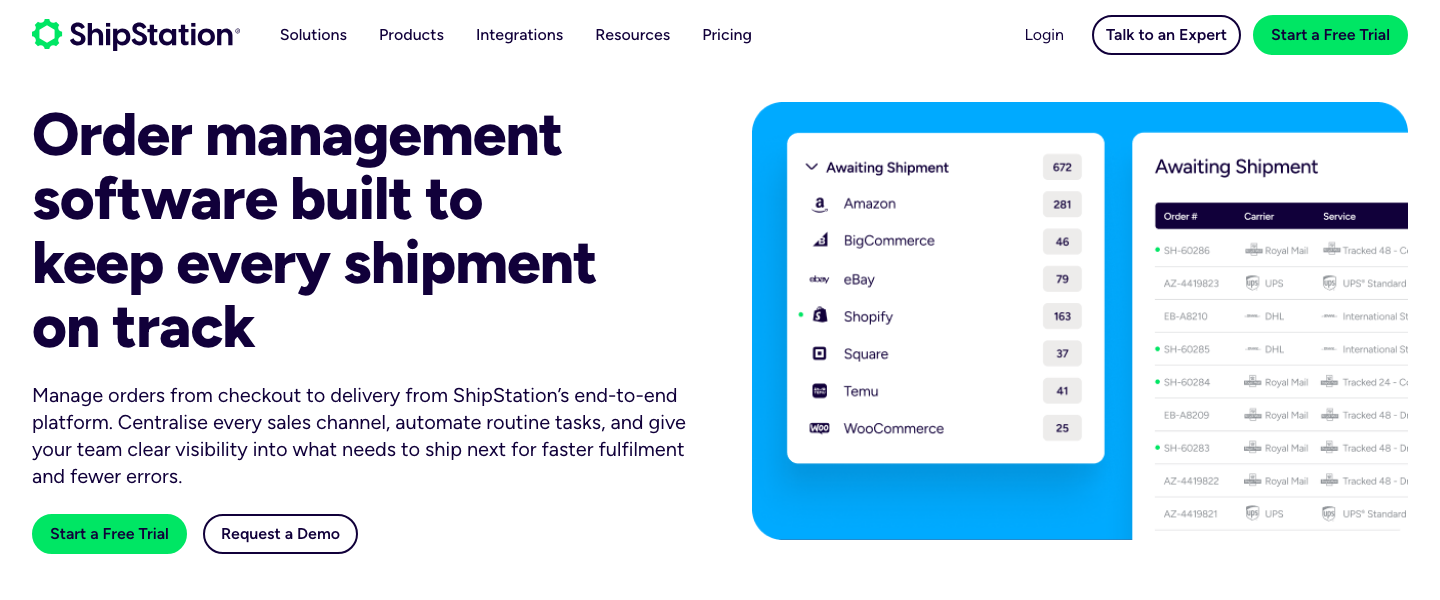
ShipStation, owned by Auctane, is one of the most widely used shipping platforms in North America. It connects to over 70 carriers worldwide and integrates with virtually every major ecommerce platform, including Shopify, Amazon, eBay, and WooCommerce.
The platform is known for its robust automation engine, which lets you create rules that automatically assign carriers, apply shipping presets, add insurance, and tag orders based on custom conditions. For Shopify merchants processing hundreds or thousands of orders per day, this kind of hands-off workflow is a major productivity booster.
ShipStation Pros
- Extensive carrier network: Access to USPS, UPS, FedEx, DHL Express, and dozens of regional carriers with pre-negotiated discounted rates.
- Powerful automation rules: Build complex if/then logic to auto-select services, print labels in batches, and route orders without manual intervention.
- Multi-channel support: Aggregates orders from Shopify, Amazon, Walmart, Etsy, and 100+ other selling channels into one dashboard.
- Branded tracking pages: Customizable tracking experience with your store branding, cross-sell opportunities, and estimated delivery dates.
- Shopify-native rate display: Can push real-time carrier rates to Shopify checkout so customers see accurate shipping costs.
ShipStation Cons
- European carrier coverage is limited: While it supports some international carriers, its European regional carrier network is thin compared to Sendcloud.
- Interface can feel dated: Although Auctane has been updating the UI, some users still report the interface feels cluttered when managing complex workflows.
- Returns handling is basic: The built-in returns process exists but lacks the polish and self-service portal features that Sendcloud offers natively.
- Higher-tier plans get expensive: Once you need advanced features or higher shipment volumes, costs can climb quickly.
 Sendcloud Overview
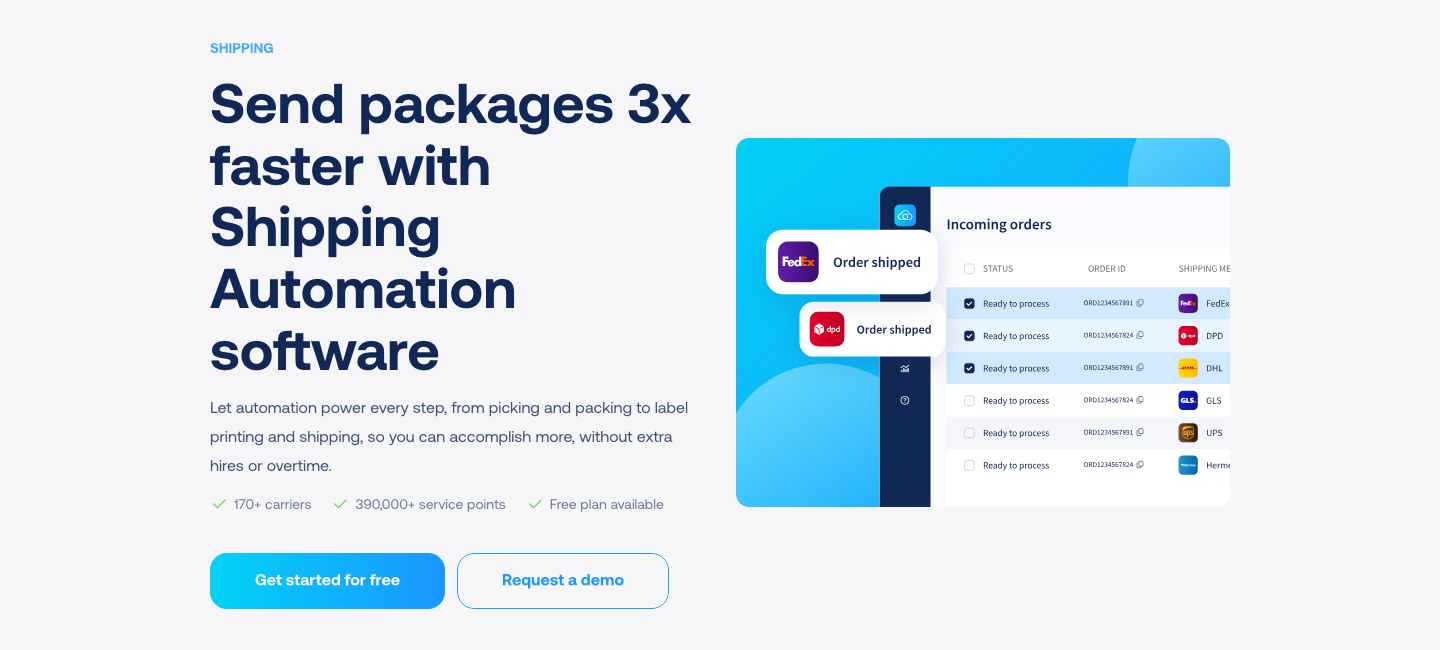
Sendcloud is a shipping automation platform headquartered in the Netherlands, purpose-built for European ecommerce. It connects to over 100 carriers across Europe — including national postal services, parcel lockers, and same-day delivery providers that most US-centric platforms simply don’t support.
What sets Sendcloud apart is its focus on the full post-purchase experience: label creation, tracking notifications, branded tracking pages, and a self-service returns portal are all baked into the platform. For Shopify merchants selling across multiple EU countries, Sendcloud handles the complexity of cross-border shipping rules, customs documentation, and localized carrier preferences with ease.
Sendcloud Pros
- Unmatched European carrier coverage: Connects to 170+ carriers including PostNL, DPD, Colissimo, GLS, Correos, InPost, and many more regional providers.
- Built-in returns portal: A branded, self-service returns page that customers can use to initiate returns — no custom development needed.
- Shipping rules engine: Automate carrier selection based on weight, destination, order value, and other conditions.
- Checkout optimization: Dynamic delivery options at Shopify checkout including parcel shop pickup, nominated day delivery, and localized carrier names customers trust.
- Customs and duties support: Automated customs forms and HS code management for cross-border EU and international shipments.
Sendcloud Cons
- North American carrier support is weak: USPS, UPS, and FedEx integrations are limited compared to what ShipStation offers domestically.
- Automation is less granular: Shipping rules are capable but don’t match the depth and complexity of ShipStation’s automation engine.
- Scaling costs can surprise: Some advanced features like branded tracking and the returns portal require higher-tier plans.
- Multi-channel breadth is narrower: Primarily focused on Shopify, WooCommerce, and Magento — not as many marketplace integrations as ShipStation.
ShipStation vs Sendcloud: Feature-by-Feature Comparison
Let’s break down how these two platforms stack up across the features that matter most to Shopify store owners.
| Feature | ShipStation | Sendcloud |
|---|---|---|
| Best For | North American sellers, high-volume multi-channel | European sellers, cross-border EU shipping |
| Carrier Network | 250+ carriers (strong US/CA coverage) | 170+ carriers (strong EU coverage) |
| Shopify Integration | Native app, real-time rates at checkout | Native app, dynamic checkout delivery options |
| Automation | Advanced rules engine with complex logic | Shipping rules (capable but less granular) |
| Returns Management | Basic returns support | Branded self-service returns portal |
| Branded Tracking | Yes, customizable | Yes, customizable (higher tiers) |
| Customs/Duties | Customs forms supported | Automated customs with HS code management |
| Multi-Channel | 100+ integrations (marketplaces, carts, ERPs) | Focused on major platforms (Shopify, Woo, Magento) |
| Free Plan | No — every published plan is paid | Yes — up to 20 parcels/month |
Pricing Comparison
Pricing is often the deciding factor for growing Shopify stores.
Key Takeaway: Sendcloud’s free plan makes it easier to get started with zero commitment — 20 parcels a month, no subscription fee — which is ideal for newer Shopify stores testing the waters. ShipStation’s entry-level pricing is reasonable but every plan is paid from day one. The two diverge again at the top: Sendcloud publishes a quote-only Enterprise tier above its paid ladder, while ShipStation’s published ladder simply ends, so at very high volume you are weighing a published number against one you have to ask for.
Shopify Integration: How Do They Compare?
Both ShipStation and Sendcloud offer native Shopify apps available in the Shopify App Store, but their integration approaches differ in meaningful ways.
ShipStation + Shopify
ShipStation’s Shopify integration pulls in orders automatically and syncs tracking information back to Shopify once labels are printed. You can configure real-time carrier rates to display at checkout, giving customers accurate shipping costs. The platform also supports Shopify’s order tags and notes, making it easy to filter and organize orders within ShipStation’s dashboard.
For stores selling on multiple channels beyond Shopify, ShipStation’s ability to aggregate everything into a single queue is a significant advantage. You process all orders — Shopify, Amazon, eBay, and more — from one interface.
Sendcloud + Shopify
Sendcloud’s Shopify integration shines at the checkout level. It can display localized delivery options including parcel shop pickup points, nominated delivery dates, and carrier names that customers in specific countries recognize and trust. This is a meaningful conversion optimization for European stores where delivery preferences vary wildly by country.
The integration also syncs tracking data back to Shopify and triggers branded tracking email notifications automatically. Sendcloud’s returns portal integrates directly with Shopify orders, allowing customers to initiate returns without contacting support.
Automation and Workflow
Automation is where these platforms diverge most significantly.
ShipStation’s automation engine is arguably the most powerful in the shipping software category. You can build multi-condition rules that evaluate order weight, destination, SKU, order value, tags, and more — then automatically assign carriers, services, package types, insurance, and confirmation requirements. For high-volume Shopify stores processing thousands of orders daily, this level of automation eliminates hours of manual decision-making.
Sendcloud’s shipping rules are capable and cover the most common automation needs — selecting carriers by destination country, weight, or order value. However, the logic engine doesn’t support the same depth of nested conditions. For most small-to-mid-size Shopify stores, Sendcloud’s automation is more than sufficient. But power users who need complex routing logic will feel the limitations.
Who Should Choose ShipStation?
- US and Canadian Shopify merchants who ship primarily within North America and want the deepest USPS, UPS, and FedEx integrations with pre-negotiated rates.
- Multi-channel sellers who need to manage orders from Shopify, Amazon, Walmart, eBay, and other marketplaces in a single dashboard.
- High-volume operations that rely on complex automation rules to process thousands of shipments per day without manual intervention.
- Stores needing batch processing — ShipStation excels at printing hundreds of labels in a single batch with predefined rules applied automatically.
Who Should Choose Sendcloud?
- European Shopify merchants who need access to local carriers like PostNL, DPD, Colissimo, GLS, Correos, and parcel locker networks like InPost.
- Cross-border EU sellers who deal with customs documentation, varied VAT rules, and country-specific delivery preferences.
- Stores prioritizing the returns experience — Sendcloud’s branded returns portal is a standout feature that reduces support tickets and improves customer satisfaction.
- Newer or smaller Shopify stores looking for a free entry point to professional shipping software without upfront commitment.
ShipStation Alternatives Worth Considering
If neither platform feels like the right fit, a few other ShipStation alternatives are worth a look for Shopify merchants:
- Pirate Ship: Free to use (you only pay for postage). Excellent for small US-based Shopify stores that want USPS and UPS discounts without a monthly subscription.
- EasyPost: A developer-friendly API-first shipping platform. Best for Shopify stores with technical teams who want to build custom shipping workflows.
- ShipBob: A fulfillment-as-a-service platform. If you want to outsource warehousing and shipping entirely, ShipBob integrates natively with Shopify.
Our Verdict: ShipStation vs Sendcloud for Shopify in 2026
Key Takeaway: There is no single “best” shipping software — the right choice depends entirely on where your customers are and how complex your fulfillment needs are.
Choose ShipStation if your Shopify store ships primarily within the United States and Canada, sells across multiple channels, and needs a battle-tested automation engine to handle high order volumes. ShipStation’s carrier discounts and workflow automation are hard to beat for North American operations.
Choose Sendcloud if your Shopify store serves European customers, ships across multiple EU countries, and values a polished post-purchase experience including branded tracking and a self-service returns portal. Sendcloud’s European carrier network and checkout optimization features give it a clear edge in that market.
For stores that ship both domestically in North America and internationally to Europe, it’s worth testing both — Sendcloud’s free plan covers 20 parcels a month indefinitely and its trial runs 14 days, and ShipStation’s cheapest plan is $14.99/mo, so a month of each is a cheap experiment. Some merchants even run both — using ShipStation for domestic US shipments and Sendcloud for European orders — though this adds operational complexity.
Whichever platform you choose, the most important thing is to move beyond Shopify’s built-in shipping and invest in a dedicated solution. The time savings, cost reductions, and improved customer experience pay for themselves within weeks.
Try ShipStation Free Try Sendcloud FreeAt your current volume, who packs your orders?
- We do, in-house — your answer
- A 3PL — your answer
- Both — split by product or region — your answer
- We don't ship physical goods — your answer
One tap, no sign-in. We store the count for each option and nothing else — no cookie, no account, no identifier, and nothing you typed. Nothing is saved on your device, so reloading the page asks again.
See the live Shipping & 3PL leaderboard — every product we have verified in this category, ranked by what it costs at your volume, with every figure dated and sourced.